
We believe that defending the right to existence and a good life for all forms of diversity requires collective action, strong partnerships, and active participation in networks of people and organizations committed to building the world we want to see. For this reason, our work is carried out in collaboration with communities, collectives, social movements, civil society organizations, cooperatives, trade unions, public institutions, educational institutions, and many other partners at both national and international levels.
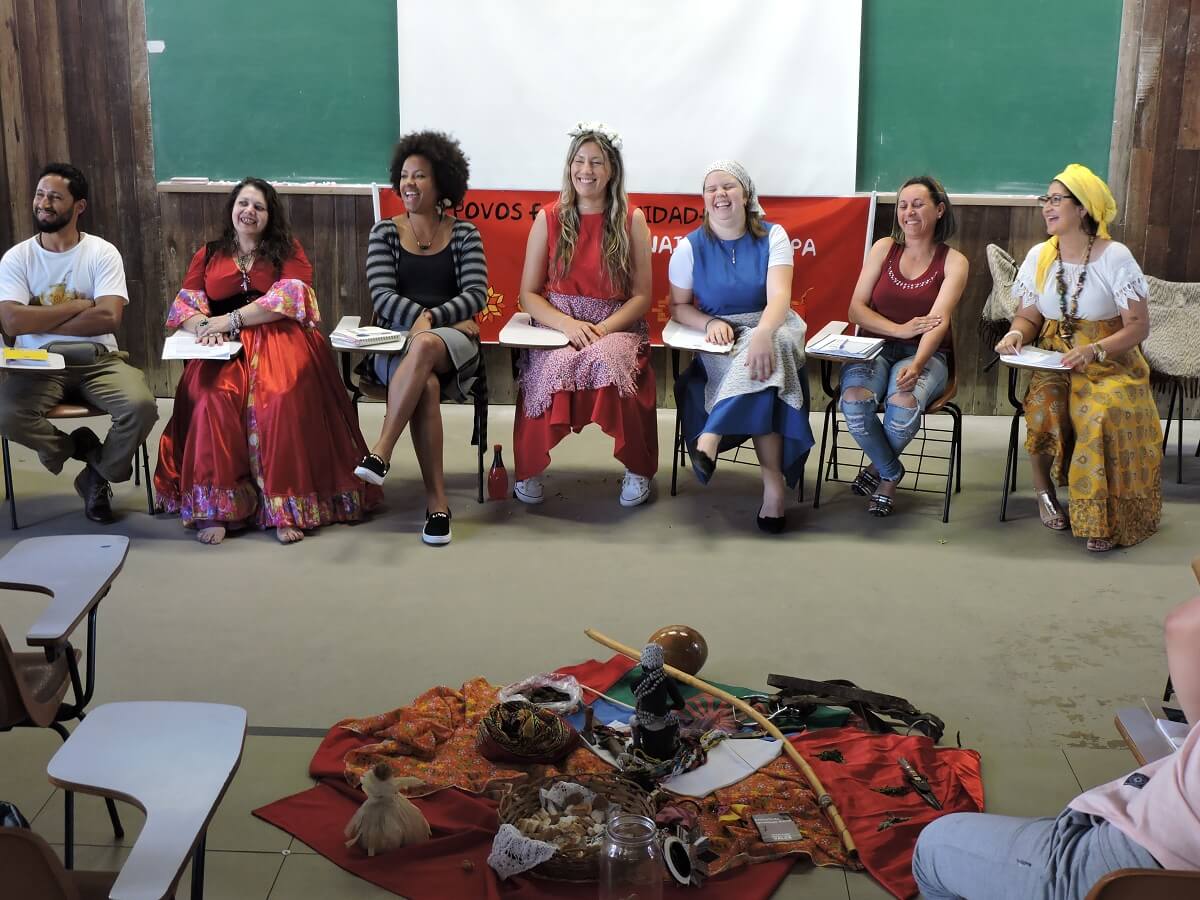
Photo: Archive of the Committee of Traditional Peoples and Communities of the Pampa
For many years, we have worked through this collaborative approach, helping create and actively participate in important spaces for articulation and collective action, including:
A global ecumenical coalition made up of churches and faith-based organizations, active in more than 120 countries. ACT Alliance works through collaborative networks to promote social justice, humanitarian aid, transformative development, and human rights advocacy, with a focus on issues such as climate justice, gender justice, migration, peace, and security. FLD has been part of ACT Alliance since 2010, participating in national and regional forums, working groups, councils, and joint initiatives, while also implementing projects in partnership with other member organizations. FLD also incorporates the ACT Alliance logo into its visual identity, reinforcing its commitment to collective and global action.
LEARN MORE
A network composed of civil society organizations working to promote and defend human rights in Brazil. AMDH coordinates collective actions for monitoring, reporting violations, and political advocacy, contributing to the development of public policies grounded in justice, equality, and dignity. FLD works in partnership with AMDH, collaborating in the production of reports and the monitoring of strategic issues such as democracy, social participation, diversity, and the fight against violence.
LEARN MORE
A broad, plural, and decentralized network that brings together organizations, social movements, collectives, peoples and communities from rural areas, forests, and waters, as well as individuals engaged in promoting agroecology in Brazil. ANA works to strengthen territorial experiences, collectively build public policies, and advance political advocacy in defense of food sovereignty and food security, social justice, biodiversity, and the rights of peoples and communities. FLD participates in ANA’s Political Articulation Collective and is also part of its Agroecological Knowledge Building Working Group.
LEARN MORE
Brings together civil society organizations (CSOs) working in the defense of rights, democracy, and the construction of a just and inclusive society. Founded in 1991, Abong serves as a space for political articulation, knowledge production, and public advocacy in defense of democratic freedoms, social and environmental justice, and the strengthening of civil society organizations in Brazil. FLD is a member of Abong and actively participates in its initiatives, having also served on its Executive Board from 2022 to 2024.
LEARN MORE
Through its intercultural work, the Committee fosters understanding of the Pampa’s sociocultural diversity and the structural factors behind exclusion, intolerance, and socio-territorial violence affecting traditional peoples and communities within the biome. In 2015, FLD, together with the Pacari Articulation, promoted the 1st Gathering of Traditional Peoples and Communities of the Pampa, which led to the creation of the Committee. Since then, FLD has continued to work in partnership with and support its initiatives and projects.
LEARN MORE
A network made up of groups, collectives, and solidarity economy organizations — mostly led by women — working in areas such as food production, handicrafts, clothing, and recycling. The network seeks to promote income generation, women’s economic autonomy, and the expansion of spaces for fair trade and responsible consumption. The Network was created in 2012 by solidarity economy groups supported through FLD’s Program of Small Projects, with the goal of strengthening one another through exchange and collective work. Today, it includes approximately 20 groups based in Rio Grande do Sul, 20 in Santa Catarina, and 10 in Paraná.
LEARN MORE
A network made up of diaconal institutions linked to the Evangelical Church of the Lutheran Confession in Brazil (IECLB), created to strengthen territorial action, promote public advocacy and sustainability strategies, and provide spaces for training and collective articulation. The Network was established in 2012 as an initiative of FLD in partnership with the IECLB General Secretariat. Today, FLD is part of both the Management and Coordination Groups of the Diakonia Network.
LEARN MORE
Made up of farming families, organizations, and institutions from the three southern states of Brazil and the southern region of São Paulo state, the Ecovida Network is a space for articulation and collective action aimed at strengthening agroecology as part of building a society that respects and values the realities of different peoples and communities. Created in 1998 through the articulation of non-governmental organizations and farming communities, Ecovida is now the largest participatory certification network in southern Brazil. FLD currently takes part in its general coordination.
LEARN MORE