
Inspired by the Lutheran World Federation (LWF) and guided by a diaconal journey and a public witness of a compassionate faith, the Evangelical Church of the Lutheran Confession in Brazil (IECLB) created the Development Projects Service (SPD) to support people affected by poverty and hunger.
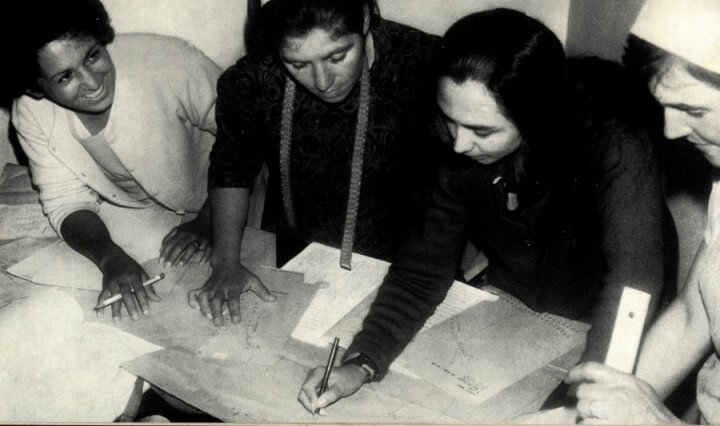
Historic photograph of the Development Projects Service (SPD), featured in an article by Rolf Schünemann. Photo: IECLB Historical Archive.
Smallholder farming families were being displaced from rural areas by the expansion of large-scale agricultural production. In response, the IECLB created the Center for Small Farmer Support (CAPA) to help families remain on their land and promote economically and ecologically sustainable practices. Years later, its name was updated to Center for Agroecology Support and Promotion.
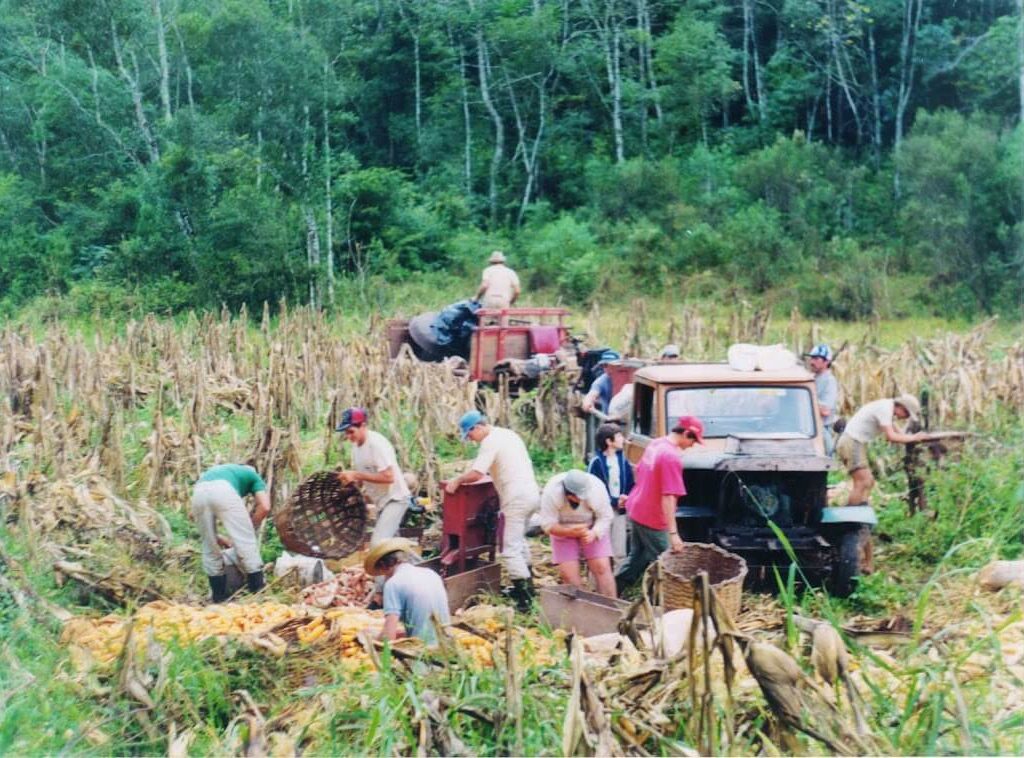
Corn seed harvesting in Rancho Grande, Concórdia, Santa Catarina, Brazil. Photo: Historical Archive.
The IECLB created a council to study and coordinate its work with Indigenous peoples across Brazil. This led to the creation of the Indigenous Mission Council (COMIN), later renamed the Mission Council among Indigenous Peoples.
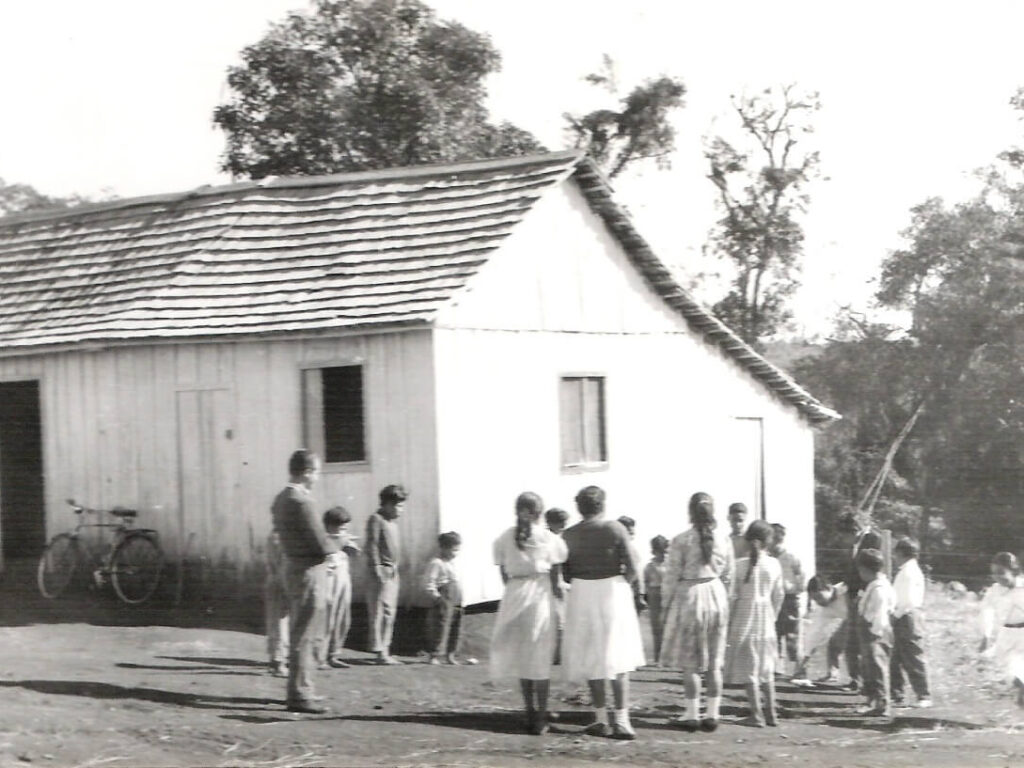
Indigenous school of the Kaingang people in the Guarita Indigenous Territory, Tenente Portela, Rio Grande do Sul, Brazil, 1960s. Photo: Historical Archive.
Over the years, the demand for support, project accompaniment, and resource mobilization continued to grow. In response, the SPD became FLD — a civil society organization with its own institutional identity — expanding its support for vulnerable communities and their transformative initiatives through the Program of Small Projects Program.
FLD’s Gender Justice Policy is approved by the Assembly of the Deliberative Council.
FLD’s Socio-Environmental Justice Policy is approved by the Assembly of the Deliberative Council.
CAPA and COMIN become part of FLD as institutional programs, expanding our areas of work and the communities we support.
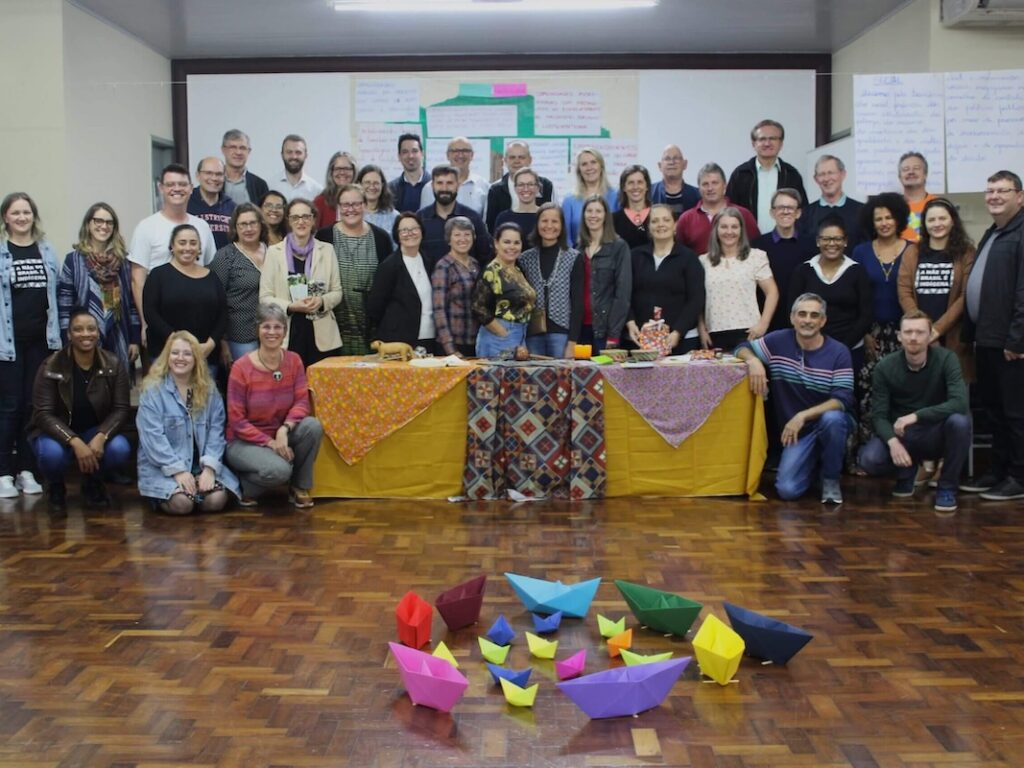
During the 24th Ordinary Assembly of FLD’s Deliberative Council, the foundations of the organization’s Political-Pedagogical Project were approved, including our new mission, areas of work, and strategic objectives.
24th Ordinary Assembly of FLD’s Deliberative Council, held in Porto Alegre, Rio Grande do Sul, Brazil, on May 23–24, 2023. Photo: Daniela Silva Huberty
FLD’s Board of Directors approves the creation of the Program of Anti-Racist Education, building on COMIN’s experience in intercultural dialogue initiatives with schools and universities.
FLD strengthens its work through the Program CAPA of Agroecology, the Program COMIN of Rights Defense , the Program of Anti-Racist Education , the Program of Small Projects , and the projects currently being implemented.